Rejuran is definitely a Korean aesthetic treatment that has exploded in discussion on Taiwan’s Dcard and Threads. Why does this skin booster product, known as the “skin fire extinguisher,” make Taiwanese girls willing to fly to Seoul and wait in line? This article will help you understand the principles of Rejuran, the effects of different packaging, and the most authentic post-treatment recovery process.
Why is Rejuran so popular?
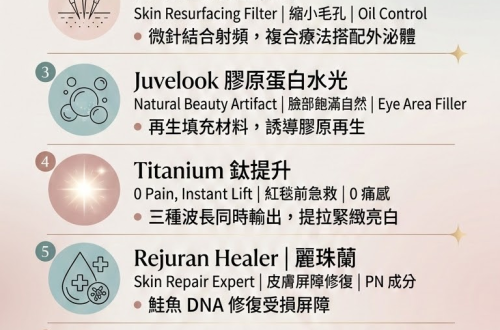
The core ingredient of Rejuran is PN (Polynucleotide), extracted from salmon DNA. Unlike general hyaluronic acid skin boosters that only provide hydration, Rejuran is more like a “skin repair agent” that can repair damaged barriers from the root and increase skin thickness.
Main Benefits:
- Deep Repair: Resolves allergies, redness, and seasonal dryness/itching
- Pore Refinement: Improves fine lines and skin roughness
- Brighten Skin Tone: Improves dullness, giving the skin that Korean-style dewy glow
What are the differences between Rejuran Black, Blue, Red, and White boxes?
Menus in Korean clinics are dazzling. Before choosing, you must check the packaging color carefully, as each corresponds to different skin concerns:
| Color | Name | Main Benefits | Applicable Areas |
| Black Box (Healer) | Classic Version | Full face repair, firming, oil-water balance | Full face, neck |
| Blue Box (S) | High Concentration Version | Targeted repair for depressions, scar tissue | Acne scars, pits (firmer texture) |
| Red Box (I) | Lightweight Version | Improves dark circles, fine lines around eyes | Eye area (thinnest texture, less likely to cause lumps) |
| White Box (HB) | Pain-reduction Version | Hydration + Repair (contains hyaluronic acid and anesthetic) | Full face (top choice for those afraid of pain) |
Post-treatment Redness Recovery Record: How long until you can go out in public?
Many people worry about “papules” or redness after Rejuran. Below is a standard recovery timeline:
Day 1: Day of Treatment (Papule Phase)
Immediately after the injection, there will be small bumps like mosquito bites (papules) on the face; this is normal.
- Status: Full face redness with obvious bumps
- Care: Do not touch water for 12 hours; it is recommended to use the repair mask provided by the clinic
Day 2-3: Redness Subsiding Phase (Recovery Begins)
Papules usually flatten within 24-48 hours, and redness will turn into a light pink.
- Status: Possible slight bruising at the injection sites
- Care: Enhance moisturizing; strictly avoid using whitening products or those containing acids (Retin-A, Salicylic acid)
Day 5-7: Glowing Phase (Effects Appear)
The skin begins to become delicate, and you will feel a very smooth texture when washing your face in the morning.
- Status: Redness completely gone, makeup applies very smoothly
- Suggestion: Be sure to apply extra sunscreen when going out
Rejuran Frequently Asked Questions (QA)
Q1: Does Rejuran really hurt?
To be honest: It really hurts! Rejuran has a thicker consistency, and there is a noticeable aching and swelling sensation when the medicine is injected.
💡 Tip: For those afraid of pain, it is recommended to choose the “White Box (HB)” or use a “skin booster machine.” While manual injection is more precise, the pain is stronger.
Q2: How much does Rejuran cost in Korea?
In the Gangnam area of Seoul, the price for a single dose (2cc) of the Black Box is usually between 150,000 and 250,000 KRW (depending on the clinic grade and whether it’s manual or machine-injected).
Q3: How many sessions are needed for it to be effective?
Although you can feel the difference after one session, medical advice suggests 3 consecutive treatments (at 3-4 week intervals) for effects to last over six months.
Is Rejuran right for you?
If you suffer from thin skin, easy redness, enlarged pores, or chronic dryness, Rejuran is a high-value choice in current Korean aesthetic medicine. However, if you are looking for an immediate “filling effect” (such as fuller cheeks), it is recommended to choose hyaluronic acid or Juvelook instead.